The roulette reverse martingale strategy flips the classic system on its head. Instead of doubling after a loss to claw back ground, you ratchet your stake up after a win and reset after a loss. It suits shorter, punchier sessions where the goal is to ride hot streaks rather than survive cold ones. After years handling live chat escalations across the Aussie market, I reckon the players who get on best with this approach are the ones who pre-commit to a stop point and stick to it.
What the System Actually Does
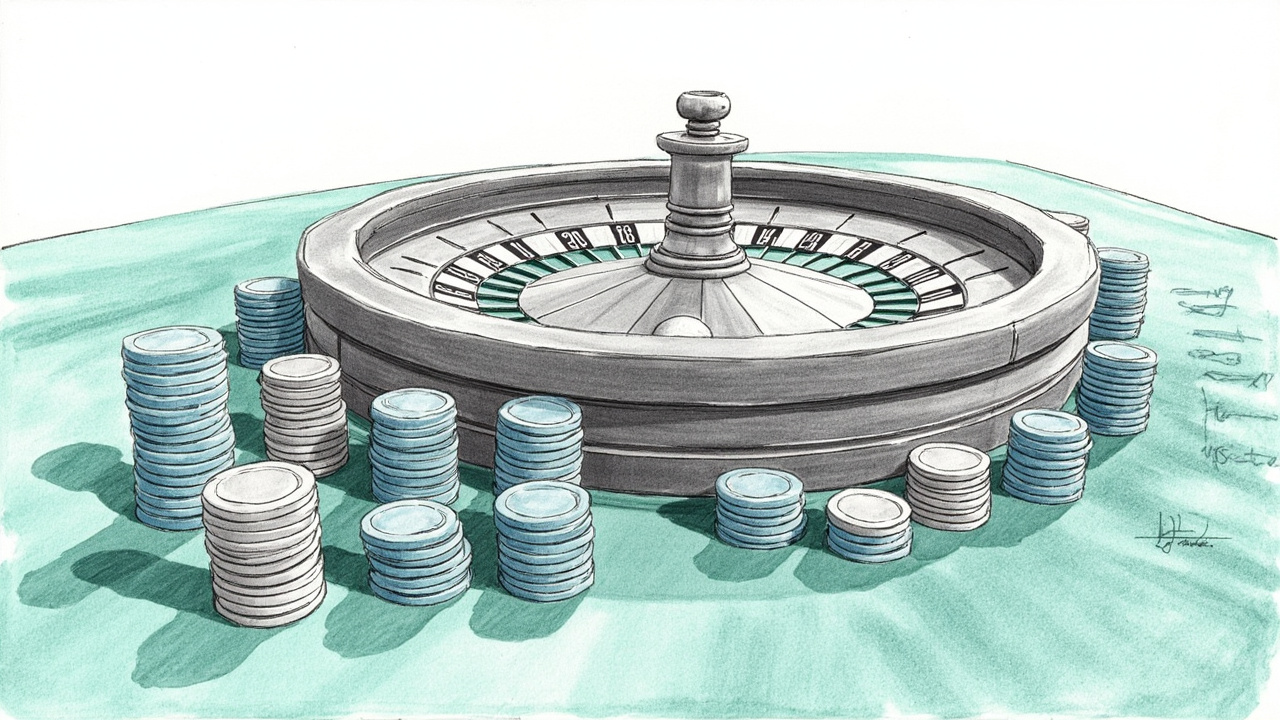
The reverse martingale is a positive progression, also called the Paroli. Place an even-money wager – red or black, odd or even, high or low – and if it lands, let the winnings ride by staking the full payout on the next spin. Lose, and you return to your base unit immediately. Classic martingale tries to defeat variance with deep pockets; the reverse version leans into the fact that roulette wins and losses arrive in clusters you can neither predict nor control.
A few traits separate it from other systems. It only works cleanly on even-money outside bets at a 1:1 payout. The bankroll hit on any single spin never grows past your last doubling, so exposure stays bounded by the size of your current stake rather than the size of your losses. Most disciplined versions cap the run at three or four wins before forcing a reset, which is the difference between a strategy and just gambling – anyone telling you to ride a streak indefinitely is selling vibes, not a system. If you’re looking to put it into action, the live dealer lobby at https://woohoo999.com/ runs European roulette with $1 minimums and $500 maximums on outside bets, which sits in the right envelope for the progression.
Mechanics, Caps, and the Win-Reset Loop
Sizing the Base Unit
The base unit is the figure you return to after every loss, and it dictates everything else. A common starting point is 1-2% of your session bankroll per unit, which keeps a cold streak from draining your funds before the system has a chance to work. On a $200 session bankroll, that means base units of $2 to $4. Pick the unit size before you open the table, not mid-spin, and make sure the table minimum doesn’t force you up a level – that’s how punters accidentally over-commit on the first bet of the night. Keep the base unit at or below the table minimum so a reset always costs you one chip, never two.
The Progression Step-by-Step
After a win, you stake the full return – your original bet plus the winnings – on the next spin. So a $4 win at even money becomes an $8 stake, then $16, then $32 if you keep winning. The progression stops at a defined cap, almost always three or four consecutive wins. That cap is the safety valve: without one, a rare but inevitable six- or seven-run streak hands back everything the earlier wins earned you. Players running this on European roulette (single zero) keep a 2.7% house edge per spin, the friendliest version of the game for any flat or progressive system. The math behind American roulette card counting, where the 5.26% house edge reshapes every calculation, has no real relevance here – a positive progression on outside bets doesn’t care about the wheel, only the streak.
Stop-Loss, Target, and Session Length
The reverse martingale lives or dies on its stop conditions, not the betting math. Set a session profit target – three base units is a sensible default – and walk away when you hit it. Set a hard loss limit, typically five base units, and stop the moment it’s reached. Most live dealer tables spin every 45-60 seconds, so a 30-minute session runs 30-40 spins, plenty of room for two or three win-streaks and a handful of resets. Process-wise, a stop-loss rule that triggers an automatic logout is more reliable than willpower, the same lesson we apply in our crypto wallet and KYC flows to keep players from making decisions in the heat of the moment.
Who Actually Fits the Reverse Martingale
Three player profiles tend to settle into the system comfortably. The short-session social player – someone spinning for 20 minutes while waiting for a mate in Geelong, an hour down the Princes from the city after the Cats game at Kardinia Park on a Sunday arvo – benefits because the capped progression matches a fixed window of play and leaves the rest of the night free for a beer. The structured system player, who prefers defined rules over gut calls, finds the win-reset pattern easy to follow without second-guessing, and rarely has to ask support for clarification because the rules don’t shift mid-spin. The casual hybrid likes to have a flutter, mixing reverse martingale units with a few flat spins on a single number for entertainment value, and the bounded exposure of the progression keeps that side play from running away. From a player-experience angle, anyone who treats the table as entertainment with a defined cost gets on with it fine; anyone who needs long sessions, deep chasing behaviour, or expects the system to overcome the house edge will find it just as unforgiving as every other progressive.
The reverse martingale isn’t a magic fix and never was – it’s a tidy, bounded framework that rewards discipline and punishes improvisation. Set the unit, set the cap, set the stops, and let the system do what it does. If you can’t do all three before your first spin, the table isn’t the right place for you yet. No worries, take a break, come back fresh.

Glossary
- Base unit: The standard bet size you return to after every loss.
- Positive progression: A betting system that increases stakes after wins rather than losses.
- Even-money bet: A wager that pays 1:1, such as red/black, odd/even, or high/low.
- Stop-loss: A pre-set loss limit at which the session ends regardless of plans.
- House edge: The built-in mathematical advantage the casino holds on each spin, from 2.7% on European roulette to 5.26% on American.